Scroll to Gold: How 15-Second TikTok Clips Are Turning Into Chart-Topping Records
Not too long ago, getting a record deal meant pressing demo tapes, cold-calling radio stations, and praying some A&R rep picked up your call. Today? You need a hook, a beat drop, and about 15 seconds of magic. TikTok has completely flipped the script on how hit records are born — and hip-hop is right at the center of that shift.
We're not talking about a trend anymore. We're talking about a full-on infrastructure change in the music business. The numbers back it up: in recent years, songs that went viral on TikTok before their official release have consistently outperformed traditional rollout strategies on the Billboard Hot 100 and Spotify Global charts. Labels aren't just watching TikTok — they're building strategy around it.
The Loop That Launched a Thousand Streams
Here's the thing about TikTok's format that nobody in a boardroom fully anticipated: a 15-second loop is essentially a stress test for a song. If that snippet hits — if it makes someone stop mid-scroll, rewatch it, duet it, stitch it — then you've already got proof of concept before a single dollar is spent on marketing.
Producers have caught on. Many are now building records backward, starting with what they call the "TikTok moment" — the exact 15 seconds most likely to blow up — and constructing the full song around it. It's a creative process that sounds counterintuitive but makes a whole lot of sense when you see the results.
Take Wizkid and Tems' "Essence." The song had been out for a while before a specific snippet caught fire on TikTok, sending it from a respected Afrobeats cut to a full-blown crossover smash. Justin Bieber hopped on a remix, and suddenly the track was living on U.S. pop radio. The TikTok moment didn't create the song — but it absolutely created the hit.
Kate Bush's "Running Up That Hill" is another case study that had the industry talking. After Stranger Things brought it back into the cultural conversation, TikTok users latched onto it and the song hit No. 1 in the UK and cracked the top five in the U.S. — nearly 40 years after its original release. That's the algorithm working in ways nobody has a full explanation for, and it's both exciting and a little terrifying.
A&R in the Age of the Algorithm
A&R — Artists and Repertoire — used to be about gut instinct and industry relationships. Now it's about data dashboards and TikTok analytics. Major labels have entire teams dedicated to monitoring sound trends on the platform, tracking which audio clips are being used across millions of videos, and identifying which artists are organically building audiences before anyone pitches them a deal.
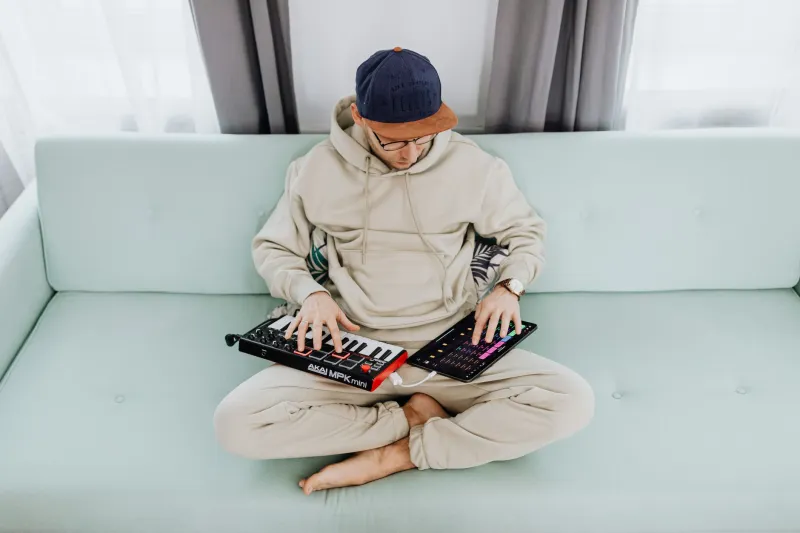
Independent artists have figured this out too. The bedroom producer who posts a beat with a catchy sample and watches it rack up 2 million uses isn't just going viral — they're auditioning in real time for a generation of listeners who will decide, democratically, whether the sound is worth following.
This has created a fascinating tension in hip-hop specifically. Rap has always rewarded authenticity — the idea that you can't fake where you came from. But TikTok's algorithm doesn't care about credibility in the traditional sense. It rewards engagement, rewatchability, and emotional resonance in a compressed format. Some purists see that as a threat. Others see it as the most honest form of A&R that's ever existed.
Songwriting Has Changed — Whether You Like It or Not
Listen to the structure of a lot of rap and hip-hop records that have blown up in the last three years and you'll notice something: the hook comes faster. The drop hits sooner. The patience that classic albums demanded from listeners has been replaced by an urgency to deliver the moment before the thumb moves on.
Producers who've adapted to this reality talk about it openly. The "intro" as a concept is practically extinct in commercially minded records. Verses are shorter. Hooks are stickier. And the sonic identity of a track — the thing that makes it instantly recognizable in a clip without any visuals — matters more than ever.
That's not necessarily a bad thing. Constraints breed creativity. Some of the most innovative production choices in recent hip-hop have come from producers trying to make something unforgettable in a tiny window of time. The challenge has pushed the craft in interesting directions.
The Flip Side: What Gets Lost in the Scroll
For all the opportunity TikTok has created, there's a real conversation happening in hip-hop circles about what the platform's dominance costs the culture. Albums as cohesive artistic statements are harder to market in a world where individual moments get extracted and consumed out of context. Artists who make slow-burn, layered music — the kind that rewards multiple listens — don't always get the same algorithmic love as someone with a catchy ad-lib and a danceable hook.
There's also the question of longevity. TikTok hits can feel disposable by design. The same virality that propels a song to the top of the charts can make it feel dated within months. Building a lasting career on TikTok moments alone is a challenge that plenty of one-hit wonders are now navigating in real time.
The New Gold Rush
Despite the complications, the opportunity is undeniable. For artists who don't have industry connections or marketing budgets, TikTok has leveled a playing field that was never particularly fair to begin with. A 19-year-old with a $200 audio interface and a strong creative instinct can reach millions of potential fans without a single industry co-sign.
Hip-hop was built on exactly that kind of hustle — making something out of limited resources and daring the world to ignore it. In that sense, TikTok isn't a disruption to the culture. It might just be the latest chapter in the same story hip-hop has always been telling.
The scroll keeps moving. The hits keep coming. And somewhere right now, a 15-second loop is turning into the next big record.