Behind the Board and Breaking Barriers: Meet the Women Redefining Hip-Hop's Sound
For most of hip-hop's history, the image of the producer has been pretty consistent: a guy hunched over an MPC or a DAW, headphones around his neck, nodding along to a beat he just cooked up. It's a powerful image — and it's also incomplete. Because women have always been part of this music's creation, even when the industry worked overtime to keep them invisible.
That invisibility is dissolving. And what's replacing it is something genuinely exciting for anyone who cares about where hip-hop goes from here.
The Long History They Don't Teach You
Before we celebrate the present, it's worth acknowledging the past — because women in hip-hop production aren't a new phenomenon. They're a newly visible one.
Missy Elliott wasn't just a rapper and performer — she was a creative architect who co-produced much of her own catalog alongside Timbaland and shaped the sonic direction of her projects with an intentionality that was years ahead of its time. She had opinions about drums, about texture, about the space between sounds. She was, by any honest definition, a producer.
Sylvia Robinson co-founded Sugar Hill Records and produced "Rapper's Delight" — arguably the first hip-hop record to reach mainstream America. Without her vision and business acumen, the genre's commercial history looks completely different. These aren't footnotes. They're foundation stones.
The problem was never a lack of women with the talent or the vision. The problem was an industry that consistently gatekept access to studios, equipment, and credit — and a cultural narrative that made it easy to overlook the contributions that were happening anyway.
Who's Changing the Game Right Now
The current moment feels genuinely different, and there are real structural reasons for that. Home studio technology has democratized production in ways that bypass traditional gatekeeping. A producer with a laptop, a decent audio interface, and the right software can build a competitive sound from anywhere — and doesn't need anyone's permission to start.
That shift has opened the door for a wave of women producers who are building serious credibilities in hip-hop and rap. Names like Malay, who shaped Frank Ocean's sonic world, and more recently producers like Kaytranada collaborator and electronic-leaning artists who blur the line between hip-hop and everything else, represent a broader creative expansion that women are leading.
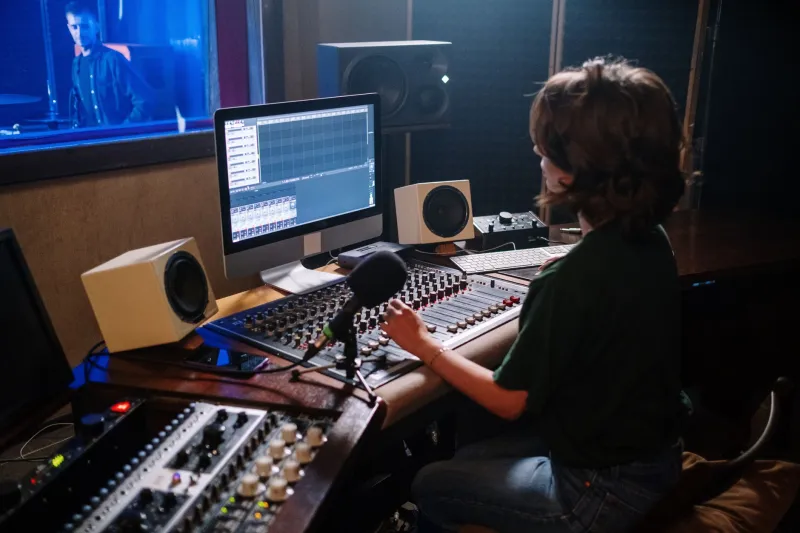
In the mixing and engineering space, the change is equally visible. Women engineers are increasingly working on major rap records, bringing technical precision and fresh sonic perspectives to sessions that once would have been almost exclusively male-staffed. The craft of mixing — making a record sound the way it sounds, balancing elements, creating the emotional experience of listening — is one where women engineers are now leaving unmistakable fingerprints.
The A&R Revolution
Production and engineering are only part of the story. Some of the most significant shifts are happening at the executive level, where A&R decisions determine which artists get developed, which sounds get invested in, and ultimately what hip-hop sounds like to millions of listeners.
Women A&R executives at major labels are increasingly shaping rosters and creative direction in ways that are bringing more diverse storytelling to the forefront of rap. When the person deciding which artists to sign and develop has a different lived experience than the industry's historical default, the music reflects that — in subject matter, in sonic choices, in which voices get amplified.
This isn't about tokenism or quota-filling. The women making these moves are doing it on the strength of their instincts, their relationships, and their genuine understanding of what's resonating with audiences. The results are in the music.
The Studio as a Space: Who Gets to Feel at Home
One of the less-discussed dimensions of this shift is the culture of the studio itself. Professional recording studios have historically been spaces where certain behaviors, attitudes, and power dynamics were normalized — and those dynamics didn't always make women feel welcome or safe.
Female producers and engineers talk openly about navigating sessions where their expertise was questioned, where they had to work twice as hard to establish credibility, or where the social environment was simply uncomfortable in ways their male counterparts never had to think about.
The rise of women-owned studios and women-led production companies is partly a response to that reality. Creating spaces where the culture is different from the ground up — where expertise is assumed rather than challenged, where the environment is professional and focused — has allowed more women to do their best work without spending energy managing a hostile room.
Those spaces are also becoming magnets for artists who value a different kind of creative environment. Some rappers and singers specifically seek out female producers or engineers because the dynamic in the room feels different — more collaborative, less ego-driven, more focused on the music.
What the Sound Actually Sounds Like
Here's the part that matters most to listeners: how is this shift showing up in the music itself?
The honest answer is that there's no single "female producer sound" — and that's exactly the point. The diversity of perspectives being brought to hip-hop production right now is creating a richer, more varied sonic landscape. Records are being made that draw on different emotional registers, different cultural references, different approaches to melody and rhythm.
Women producers working in hip-hop are bringing influences from R&B, electronic music, global sounds, and classical training into spaces that have sometimes been resistant to that kind of cross-pollination. The result is a genre that sounds more expansive than it did a decade ago — more willing to be vulnerable, more interested in texture and nuance alongside the hard-knocking elements that will always be central to rap.
The Work Ahead
None of this means the work is done. Women in hip-hop production still face structural disadvantages — in access to funding, in credit attribution, in the way their contributions get discussed in music media. The Grammy nominations for production and engineering categories still skew heavily male, even as the actual landscape of who's making the music shifts.
But momentum is real. The visibility is real. And the music — the actual records being made right now, shaped by women behind the boards — is undeniable.
Hip-hop has always been about telling the truth of your experience and daring the world to listen. The women rewriting the genre's sound are doing exactly that, one session at a time. The booth belongs to everybody now — and the music is better for it.