Ice, Ice, Culture: The Real Story Behind Hip-Hop's Jewelry Obsession
Before you even hear a bar, you see the chain. That's not an accident. In hip-hop, jewelry has always communicated something that words — even the most carefully crafted ones — sometimes can't. It's power. It's proof. It's a visual language that the culture developed over decades and has never stopped speaking.
But to outsiders, it can look like excess for excess's sake. A rapper drowning in diamond pendants, a watch that costs more than a house in the suburbs — what's the point? To understand the point, you have to understand where hip-hop came from and what it was responding to.
Where It Started: Jewelry as Resistance
Hip-hop was born in communities that the mainstream economy had largely abandoned. The South Bronx in the 1970s wasn't exactly Wall Street. The early adopters of hip-hop culture — the DJs, the MCs, the b-boys — were young people with limited access to traditional markers of success. So they created their own.
Gold rope chains, door-knocker earrings, and nameplate necklaces weren't just fashion statements — they were declarations. "I made it out. I built something. I matter." The jewelry was tangible proof of survival and hustle in a world that wasn't designed to let you win.
Run-DMC made Adidas a cultural institution. But they also put rope chains on the map as a hip-hop staple. By the time the 1990s rolled in and the crack era's street economy intersected with the rise of gangsta rap, jewelry had become a full-blown status system with its own rules, hierarchies, and price points.
The Architects: Who's Actually Making This Stuff
Behind every insane custom piece — the ones you see rappers flexing in videos and on the 'Gram — there's a jeweler who spent hours, sometimes weeks, making it happen. The jewelry game has its own legends, and in hip-hop circles, a few names carry serious weight.
New York's Diamond District has long been the starting point for many artists looking to get their first custom piece. But the most coveted work comes from a handful of independent custom jewelers who've built their reputations entirely through word-of-mouth within the culture. These are craftspeople who understand not just metalwork and gemology, but the storytelling that goes into a piece.
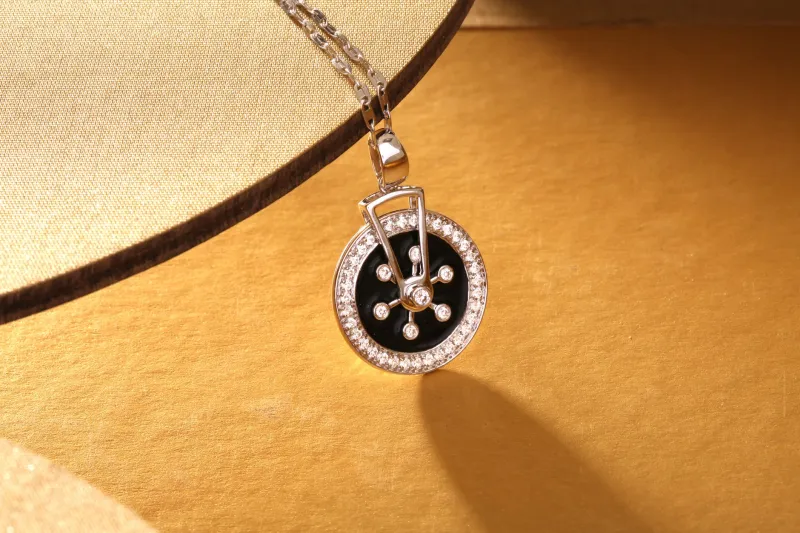
A custom pendant isn't just a design — it's a narrative. An artist might want their grandmother's face rendered in diamonds, or the skyline of their hometown, or a symbol that means something only to their crew. The jeweler's job is to translate that into something that can hang around someone's neck and tell the story without a caption.
The process is intensive. A high-end custom piece can take anywhere from two weeks to several months to complete, depending on complexity. The materials — VVS diamonds, 18-karat gold, platinum settings — are sourced carefully. And the price? We'll get to that.
What It Actually Costs
Let's talk numbers, because this is where people's jaws tend to drop.
A basic custom gold chain — nothing too flashy, solid construction — might run anywhere from $2,000 to $10,000 depending on weight and karat. Add a pendant with some diamond work and you're looking at $15,000 to $50,000 for something mid-tier by industry standards.
Now start layering in VVS stones, intricate custom designs, and the kind of name-brand jeweler markup that comes with having your piece photographed on a Grammy-winning artist, and you're in six-figure territory without blinking. Some of the most talked-about pieces in recent hip-hop history — think Lil Uzi Vert's forehead diamond situation or Travis Scott's elaborate custom pendants — represent investments that rival luxury real estate.
Watches are their own universe. A Patek Philippe or Audemars Piguet Royal Oak can start at $30,000 and climb well past $500,000 for limited editions or custom modifications. Rolex has become so embedded in hip-hop culture that specific references — the Daytona, the Day-Date — carry their own cultural shorthand within the genre.
The Symbolism Behind the Shine
Here's what non-hip-hop heads often miss: the jewelry isn't really about the jewelry. It's about the story the jewelry tells.
When an artist gets their first major chain, it's a milestone — the same way a lawyer buys a nice watch after passing the bar or a business owner treats themselves after their first profitable quarter. It's a physical marker of a life chapter. And in hip-hop, where the come-up story is central to the artistry, that marker becomes part of the public narrative.
There's also a community dimension to it. Gifting jewelry within crews and collaborations is a real practice. Producers who make an artist's biggest record might receive a custom piece as a thank-you. It's currency in a social economy that runs parallel to the financial one.
A Real One's Buyer's Guide: Getting in the Game Without Going Broke
You don't need a record deal to appreciate the culture — or to participate in it at your own level. Here's how to approach the jewelry game smart:
Start with quality over quantity. One well-made piece in solid 10k or 14k gold will outlast and outshine five cheap fashion pieces. Look for hallmarks and buy from reputable jewelers who can verify materials.
Learn the basics of diamonds. The four C's — cut, color, clarity, and carat — determine value. VVS (Very Very Slightly Included) stones are the standard reference in hip-hop culture, but VS stones are nearly indistinguishable to the naked eye and significantly more affordable.
Custom doesn't have to mean expensive. Many skilled independent jewelers — especially those building their portfolios — will do custom work at reasonable prices. Social media has made it easier than ever to find talented craftspeople who aren't charging celebrity premiums yet.
Consider moissanite. It's not a dirty word. Moissanite stones have a brilliance that rivals diamonds, and the price difference is dramatic. Plenty of people in the culture rock moissanite and nobody's checking their stones under a loupe.
Buy for meaning, not flex. The pieces that hold value — emotionally and sometimes financially — are the ones that mean something. A nameplate with your city. A pendant that represents your hustle. That's what the culture has always really been about.
The Chain Goes On
Hip-hop's relationship with jewelry isn't going anywhere. If anything, it's getting more elaborate, more creative, and more personal. The culture keeps pushing the art form forward — and the jewelers who serve it keep rising to meet the demand.
The ice is a mirror. Look at it long enough and you'll see exactly what hip-hop has always been saying: we built this, and we're not apologizing for how it shines.