Digging in the Crates: The Soul Records That Gave Hip-Hop Its Heartbeat
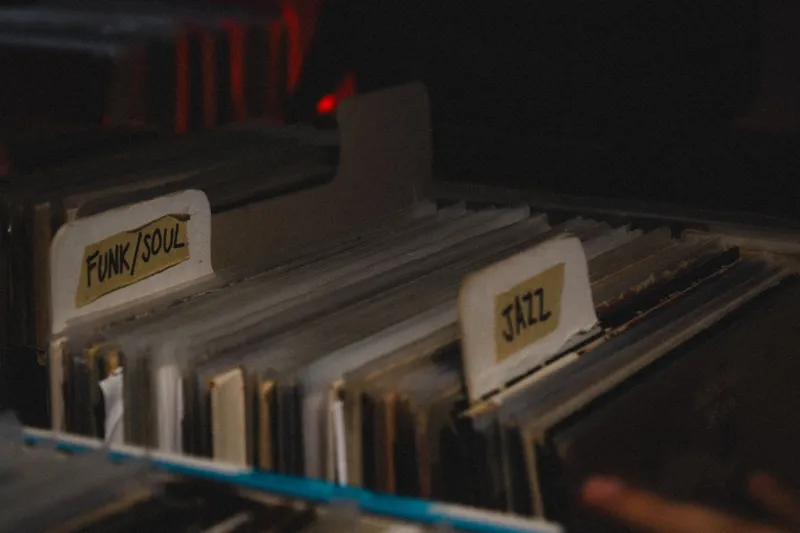
There's a moment every serious hip-hop head knows. You're listening to a classic track — something from the golden era, maybe a Pete Rock joint or a DJ Premier flip — and suddenly you hear it. The original. A horn stab, a drum break, a vocal run from some obscure 1972 soul record that most people never knew existed. And the whole thing clicks into place.
Sampling is the DNA of hip-hop. It's how the genre talked to its ancestors while simultaneously building something new. And the producers who mastered it weren't just making beats — they were archivists, storytellers, and sonic archaeologists all at once.
Let's dig into five of the most transformative moments in hip-hop sampling history, breaking down where the sounds came from, how they were transformed, and why these choices matter far beyond music nerd trivia.
1. "Impeach the President" → The Break That Built a Genre
If hip-hop has a ground zero, The Honey Drippers' 1973 recording of "Impeach the President" might be it. The drum break on that track — raw, punchy, and perfectly imperfect — became one of the most sampled loops in music history. Early DJs in the South Bronx were looping it at block parties before sampling technology even existed. They'd use two copies of the record on two turntables, switching back and forth to extend the break indefinitely.
That technique — the foundation of DJing itself — is what gave hip-hop its rhythmic backbone. Producers from Public Enemy's Bomb Squad to countless beatmakers since have returned to that break. It's not just a sample; it's a handshake across time.
The lesson here is about feel. Roy Alfred's drumming on that record had a human imperfection that drum machines couldn't replicate. Early hip-hop producers understood that intuitively. They weren't looking for technical perfection — they were looking for something that moved people.
2. James Brown's Catalog → The Infinite Toolkit
No single artist has been sampled more than James Brown. His catalog — particularly records from the late '60s and '70s with the JBs — is basically a library of raw materials that producers have been mining for five decades.
But let's get specific. "Funky Drummer" from 1970, featuring Clyde Stubblefield on drums, became one of the most sampled recordings in history. That break appears in Public Enemy's "Fight the Power," LL Cool J's "Mama Said Knock You Out," and hundreds of others. Stubblefield, who passed in 2017, reportedly never received royalties for those samples — a painful reminder of the legal and ethical complexity that runs through sampling culture.
What producers heard in Brown's records was a relentless, cyclical groove that created the perfect foundation for MCing. The repetition wasn't monotonous — it was hypnotic. And when you layered a rapper over that kind of groove, something almost ceremonial happened. It felt like church, which is exactly where a lot of these rhythms originally came from.
3. Curtis Mayfield's "Move On Up" → Pete Rock's Emotional Architecture
Pete Rock is widely regarded as one of the greatest producers in hip-hop history, and a huge part of that reputation comes from how he used soul samples not just rhythmically but emotionally. His approach to records like Curtis Mayfield's 1970 classic "Move On Up" showed that sampling could be about mood and feeling just as much as groove.
Mayfield's original is a sweeping, orchestral soul anthem about perseverance and Black pride. Pete Rock's flips of similar records — chopping horns, isolating vocal runs, building new melodies from fragments — created beats that carried the emotional weight of the originals while feeling entirely fresh.
"I grew up around records," Pete Rock has said in interviews over the years. "My cousin was DJ Chuck Chillout, so I was always around vinyl. I learned to hear things in records that other people would pass over."
That ear — trained by years of deep listening — is what separates a great sample-based producer from someone just looping a break. The best producers understand the emotional context of the original and use it intentionally. They're not stealing feeling; they're borrowing it and paying it forward.
4. Donny Hathaway's "Voices Inside" → The Soulful Loop Era
The early '90s in hip-hop were defined by a particular sonic warmth — layered, soulful, sample-heavy production that felt like a Sunday morning even when the lyrics were about something far darker. A lot of that warmth came from records like Donny Hathaway's live recordings and studio work, which producers like Large Professor, Q-Tip, and Questlove drew from heavily.
Hathaway's voice and his band's arrangements had a live, breathing quality that felt intimate even on record. When producers sampled that warmth, they were borrowing not just sound but atmosphere. The best hip-hop beats of that era felt like they existed in a specific place — a stoop in Harlem, a basement in Queensbridge.
This is the part of sampling culture that doesn't get enough credit. It's not just about the drum break or the chord progression. It's about the room sound, the tape saturation, the imperfections of analog recording that digital production couldn't fake. Producers who understood this used sampling as a way to access a sonic world that was otherwise out of reach.
5. Isaac Hayes' "Ike's Rap" → DJ Premier and the Art of the Chop
DJ Premier is arguably the greatest technical producer in hip-hop history, and his relationship with Isaac Hayes' catalog illustrates why. Hayes' orchestral soul recordings from the early '70s — dense, cinematic, and layered — gave Premier raw material for some of his most iconic work.
What Premier did with those samples wasn't just loop them. He chopped them, rearranged them, layered them with scratched vocal samples and hard drums to create something that sounded nothing like the original but felt connected to it on a cellular level. His beats for Gang Starr, Nas, Jay-Z, and Biggie used soul samples as architecture — the emotional foundation on which everything else was built.
"I don't just hear a record and think 'that's a loop,'" Premier has explained. "I hear it and think about what part of it is saying something. What part of it has a story."
That philosophy — treating every sample as a narrative element — is what elevated Premier's work from beatmaking to art.
Why Sampling Still Matters in 2024
In an era of AI-generated music and royalty-free sample packs, it's worth asking whether the crate-digging tradition still has relevance. The answer, emphatically, is yes.
Sampling at its best is an act of cultural memory. It says: this music mattered, these musicians deserved to be heard, and this groove is too good to let disappear. When a kid hears a Kendrick Lamar track and then goes looking for the original sample, a whole world opens up. That's hip-hop as education. Hip-hop as preservation.
The legal landscape around sampling has gotten more complicated — the 1991 ruling in Grand Upright Music v. Warner Bros. changed everything, and clearance costs have pushed many producers toward interpolations and original compositions. But the spirit of sampling, the act of deep listening and creative transformation, is still very much alive.
The crates are still full. You just have to know how to dig.